What Is Inflation? Why Savings Lose Value Over Time
February 23, 2026Inflation means your money buys less over time: the number in your bank account can stay the same while food, transport, rent, education, and other living costs rise.
Purchasing power matters more than the balance alone: savings only grow in real value when the interest you earn is higher than inflation.
Saving is still essential: cash is useful for emergencies and short-term goals, but it may not be enough for long-term goals if inflation keeps reducing its real value.
Next lesson: after understanding inflation, learn why an emergency fund is usually the first financial foundation before investing.
What is inflation?
Inflation is the increase in the general price level of goods and services over time. In simple terms, it means the same amount of money buys fewer things than before.
For example, 100,000 VND today may not buy the same amount of food, transport, or daily necessities a few years from now. The number printed on the note does not change, but its purchasing power can fall.
Inflation affects everyone because it changes the real value of income, savings, and long-term financial plans. This is why a beginner should not only ask, “How much money do I have?” but also, “What can my money still buy?”
A simple example: the bowl of pho
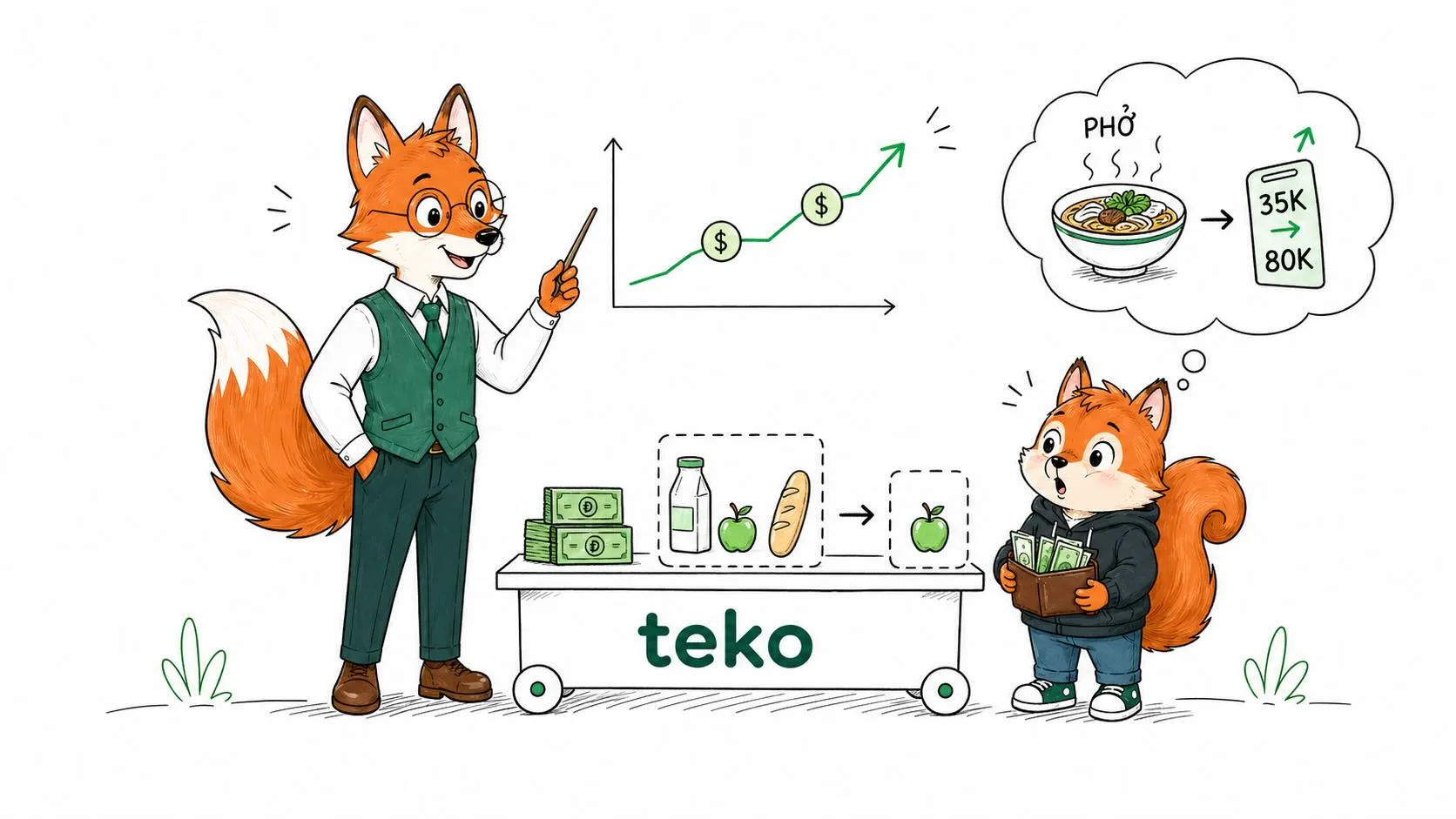
A familiar way to understand inflation in Vietnam is to think about a bowl of pho.
2016: With 100,000 VND, you might have been able to buy nearly three bowls of pho if one bowl cost about 35,000 VND.
2026: With the same 100,000 VND, you may only be able to buy one bowl if the price is around 70,000–80,000 VND, with some change left but not enough for a second bowl.
The bowl of pho has not changed very much, but the quantity you can buy has fallen. That is how inflation quietly reduces your money’s purchasing power.
How is inflation measured?
Inflation is commonly measured through the Consumer Price Index, or CPI.
CPI tracks the price changes of a basket of common goods and services. This basket can include food, transportation, housing-related expenses, healthcare, education, and other household costs.
For a reader in Southeast Asia, CPI is useful because it gives a broad picture of how the cost of living changes over time. However, your personal inflation rate may feel different from the official CPI number. If a large part of your income goes to rent, school fees, food, fuel, or healthcare, your real-life experience of inflation may be higher than the headline figure.
Why can savings lose value?
Savings can “lose value” because there are two different ways to think about money.
Nominal value is the number you see in your bank account.
Purchasing power is what that money can actually buy.
Your savings account balance may increase because of interest. But if prices rise faster than your savings interest rate, your money may still lose value in real terms.
This does not mean saving is useless. Saving is important for:
emergency funds;
short-term goals;
peace of mind;
flexibility during uncertain periods.
But if your goal is many years away, relying only on savings can be risky. Over long periods, inflation can reduce the real value of money that is sitting still.
What is the real interest rate?
The real interest rate helps you see whether your money is actually growing after inflation.
Real interest rate = savings interest rate – inflation rate
Here is a simple example. You place 10,000,000 VND in a bank deposit with a 5% annual interest rate.
After one year, your balance becomes 10,500,000 VND.
But if inflation is 6%, something that cost 10,000,000 VND last year may now cost 10,600,000 VND.
You earned 500,000 VND in interest, but you are still 100,000 VND short of buying the same item. The money did not disappear. Its purchasing power shrank.
Is inflation always bad?
Inflation is not always bad. A moderate level of inflation can be normal in a growing economy. It may reflect rising demand, business activity, and wages.
The problem is when prices rise faster than income, savings returns, or investment growth. In that situation, households may feel poorer even if their salary or bank balance increases.
Very high inflation can make daily life more expensive and long-term planning harder. Very low inflation or deflation can also be a warning sign because it may reflect weak demand in the economy.
For individuals, the practical question is not only, “Is inflation high or low?” A better question is:
Is my money growing faster than my cost of living?
Two common mistakes to avoid
Inflation can push beginners into two opposite mistakes.
Mistake 1: keeping everything in cash
Some people avoid all investment risk by keeping all their money in cash or bank deposits.
This can feel safe in the short term. Cash is useful for emergencies and near-term needs. But over many years, holding too much cash can make it harder to reach long-term goals because inflation may steadily reduce its real value.
Mistake 2: rushing into risky investments
Other people become afraid of inflation and rush into stocks, crypto, or other high-risk assets without understanding them.
This can also be dangerous. Investing without knowledge, patience, or a plan can lead to panic decisions during market downturns.
A better approach is to match your money with your time horizon:
Short-term money: keep it safe and accessible.
Long-term money: learn about disciplined investing that fits your goals and risk tolerance.
How can beginners protect money from inflation?
You cannot control inflation, but you can control how you prepare for it.
1. Build an emergency fund first
Before investing, build an emergency fund that covers about 3 to 6 months of essential living expenses.
Keep this money somewhere safe and easy to access, such as a savings account or bank deposit. This fund helps you handle unexpected expenses without selling investments at the wrong time.
2. Separate short-term and long-term money
Money you may need within the next year should usually stay safe and liquid.
Money you will not need for 3 to 5 years or longer can be considered for investment, depending on your goals and risk tolerance. This separation helps you avoid treating the stock market like a savings account.
Your situation | Better action |
|---|---|
No emergency fund yet | Save first |
Need the money within 12 months | Keep it safe and liquid |
Goal is 3 to 5+ years away | Learn about investing |
Afraid of investing | Start with education and small amounts |
Already investing randomly | Build a disciplined plan |
3. Start small and build the habit
You do not need to start with a large amount.
For example, you might begin with 500,000 VND per month. The amount matters less than the habit. Starting small helps you learn, stay consistent, and build emotional discipline.
Over time, regular investing can help you participate in the growth of productive assets instead of only holding cash. This is where concepts such as compound interest become useful later in the learning journey.
4. Think like an owner, not only a consumer
Inflation is one reason many people eventually move from only saving money to also owning assets.
Instead of only holding VND or cash, long-term investors may choose to own shares of companies, diversified funds, or ETFs. These assets can rise and fall in the short term, but they may help investors build wealth over longer periods.
The goal is not to gamble or chase quick returns. The goal is to gradually understand the difference between being only a consumer and becoming an owner of productive assets.
Saving vs. investing: which one do you need?
Saving and investing are not enemies. They solve different problems.
Saving is best for safety, stability, and short-term needs.
Investing is better suited for long-term growth, but it comes with risk and uncertainty.
A healthy financial plan usually needs both. Use savings for your emergency fund, near-term goals, and peace of mind. Use investing only for money that can stay invested for several years and after you understand the risks.
What should you ask before investing because of inflation?
Understanding inflation does not mean you should invest immediately. Before taking more risk, ask yourself:
Do I already have an emergency fund?
Will I need this money within the next 12 months?
Do I understand the asset or product I am considering?
Can I accept short-term losses without panic selling?
Do I understand fees, taxes, currency exposure, custody, and platform risk?
Am I investing because it fits my plan, or because I am afraid of inflation?
If you cannot answer these questions yet, learning more before investing is a reasonable choice.
Next step
Inflation explains why money can lose purchasing power, but the next practical step is learning how to protect yourself from short-term financial shocks.
The next lesson in Tekoversity by teko is “Emergency Fund: Your First Financial Foundation”. It explains why emergency savings usually come before investing, how much to keep, and how this safety layer supports better long-term decisions.
Read next: Emergency Fund: Your First Financial Foundation
This content is for personal finance education only and does not constitute personalized investment advice. Before investing, you should consider your goals, investment horizon, risk tolerance, and overall financial situation.