Small Idle Cash: What’s the Best Move? Discover the Power of Compounding
March 18, 2026Time matters more than capital: Starting early with a small amount consistently yields more sustainable results than waiting until you have a large sum.
The mechanism of compound interest: Reinvested earnings continuously create a cycle where "interest earns interest," allowing your assets to grow exponentially over time.
Discipline is key: Building the habit of investing consistently and patiently navigating market fluctuations is the best way to protect your purchasing power.
Why Small Idle Cash is Your Greatest Advantage
If you have some idle cash, even a small amount, congratulations! You're ready for the first step on your journey to financial empowerment. In the world of wealth building, your current balance is secondary; what truly matters is how you deploy that capital into the "time machine" starting today.
Consider the journey of two friends:
· Person A: Starts investing 1 million VND/month at age 25.
· Person B: Waits until age 35 to start, but invests double: 2 million VND/month.
Assuming an 8% annual return, by age 55, Person A will still have a significantly larger portfolio than Person B. The reason is simple: Person A gave compounding an extra 10 years to work its magic. In the math of wealth, starting small and early consistently beats starting big and late.
As we discussed in our previous article on Speculation vs. Long-term Investing, simply setting aside 10-20% of your income the moment you are paid is all the fuel you need to begin.
The Power of Compound Interest: "Interest Earning Interest"
So how does a small amount of money grow? The answer lies in compound interest.
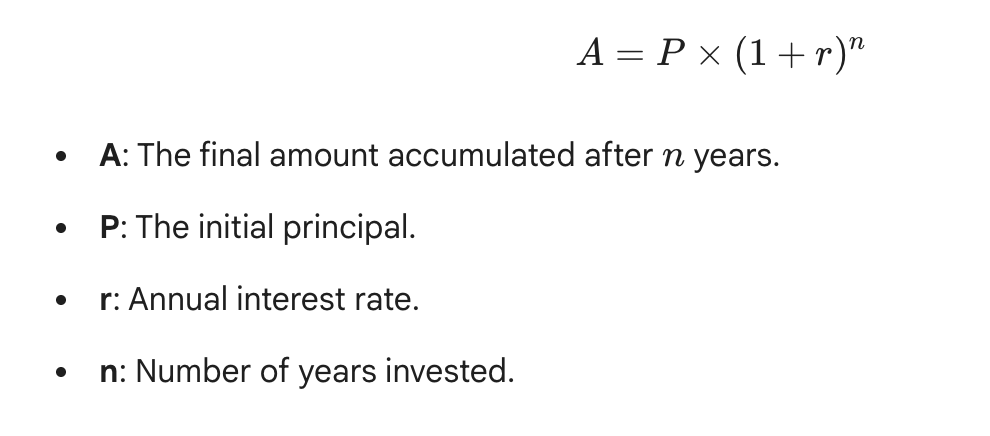
Compound interest is the process of reinvesting the interest you earn. Simply put, the interest generated is added to your initial principal, which then continues to earn interest in the next cycle. This way, "interest earns more interest," and your money grows exponentially, not just linearly.
The power of compound interest is determined by four factors:
Initial Principal: Even if it's small, it's your valuable seed.
Interest Rate: The annual rate of return on your investment.
Frequency: How often interest is calculated and added to the principal (the more frequent, the better).
Time: This is the most critical factor. The longer the time horizon, the more powerfully compound interest works.
Basic Compound Interest Formula (One-time Investment)
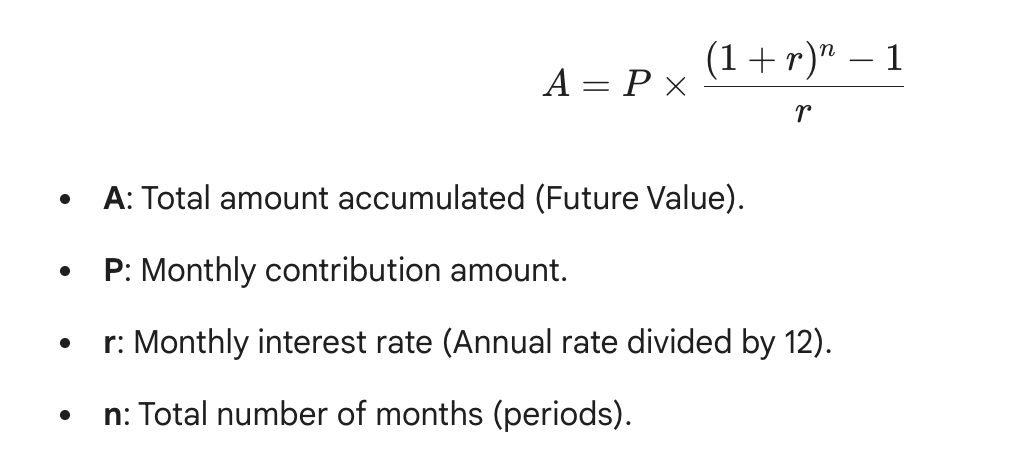
Monthly Recurring Investment Formula
Real-World Example of Compound Interest with Small Amounts
To make this clearer, let's look at the power of compound interest with an expected annual return of 8%:
Scenario 1: One-time investment only
If you invest a lump sum of 10 million VND and add nothing more:
After 10 years: You have ~21 million VND.
After 20 years: You have ~46 million VND.
After 30 years: Your money becomes over 100 million VND without you doing anything further.
Scenario 2: Consistent investing (The real power)
If you consistently add 1 million VND every month starting from age 25:
After 10 years: You have ~183 million VND.
After 20 years: You have ~734 million VND.
After 30 years: You will have over 1.6 billion VND.
In this case, your total invested capital is only 360 million VND. The remaining over 1.1 billion VND comes entirely from the power of compound interest. Small amounts, when accumulated with discipline, can transform into a sustainable cash flow for your future.
Mistakes to Avoid When You Have a Little Idle Money
For compound interest to work its magic, you need to avoid these common psychological traps:
1. Waiting until you have a lot of money to start investing: This is the most common mistake. As we've analyzed, time is more important than the amount.
2. Investing based on trends or "FOMO": Don't rush into "hot" investment channels you don't understand, like certain cryptocurrencies or penny stocks.
3. Constantly withdrawing profits as soon as you see them: Let your earnings continue to grow. Don't break the compounding cycle by withdrawing and spending the interest.
4. Not having a clear goal: "Investing to get rich" is too vague. Make your goals specific and tangible.
Conclusion: Don't underestimate the power of small amounts of money. Put them to work for you and harness the incredible power of compound interest. Combined with smart money management, discipline, and patience, you can absolutely build a solid financial future from the smallest of beginnings.
The Next Step
Mastering the math of compounding is a game-changer for your future. Now that you have the engine, make sure you have the right foundation to protect it.
Read more: [Emergency Fund: Your First Financial Cushion]